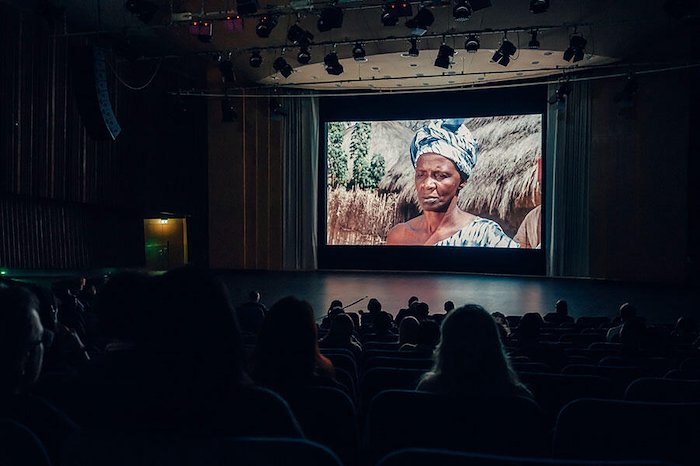
1983, an einem kalten Wintertag in New York, stellt der US-amerikanische Künstler David Hammons einen improvisierten Straßenstand auf, breitet sorgfältig geformte Schneebälle in unterschiedlichen Größen auf einer Decke aus und bietet sie zum Verkauf an. Das scheinbar absurde Angebot eines flüchtigen, wertlosen Materials mitten im urbanen Alltag wird unter dem Titel Bliz-aard Ball Sale zu einer der prägnantesten Performances der amerikanischen Konzeptkunst. Hammons, der in den 1970er- und 1980er-Jahren Teil des Black Arts Movement war, nutzt hier den öffentlichen Raum als Bühne und den Kunstmarkt als Spiegel gesellschaftlicher Machtverhältnisse. Der Verkauf von Schneebällen wird zur subtilen Parodie der ökonomischen und kulturellen Wertschöpfung. Der Film The Melt Goes On Forever (2023) von Judd Tully und Harold Crooks zeichnet die Karriere des afroamerikanischen Künstlers David Hammons nach – von den 1960er-Jahre bis zu seiner heutigen internationalen Bedeutung in der Kunstwelt. Die Künstlerbiografie wird am 06.03.2026 im englischen Original im Bremer Weserburg Museum mit englischen Untertiteln gezeigt mit anschließendem Gespräch zwischen der Künstlerin Anys Reimann und dem Publizisten und Kurator Eric Otieno Sumba.

Monira Al Qadiri’s work explores humans’ ambivalent and alienated connection to the natural world, often viewing it through the lens of petro-culture. At times, the artist highlights oil’s role in reshaping human culture and the environment; at others, she enlarges the microscopic chemical structures and organisms that either sustain life on Earth or enable its industrialized destruction. In her current show at the Berlinische Galerie, Al Qadiri navigates oil’s entangled relationship with the sea, highlighting the toxic impact of oil tankers on the ocean and retracing the surprising symbolic role played by a sea snail within the history of the industry. Eric Otieno Sumba visited the exhibition and found himself drifting in threatening waters, somewhere between the romantic ocean of the seafaring past and the modern, infrastructural sea. https://www.textezurkunst.de/en/articles/eric-otieno-sumba-monira-al-quadiri-all-her-ships/

It is easy to project a very particular kind of millennial nostalgia onto both of Liz Johnson Arthur's new books. The first, I Will Keep You in Good Company, offers a rare glimpse into the photographers workbook or scrapbook, an almost sacrosanct repository to many artists that hosts anything from an (irregular) diary, mementos, and fragments of thought and information, to assorted collages featuring source material from various magazines. Named for the now iconic queer club night, the second book PDA, by contrast evokes the era when nobody in the club had a camera phone with a mega-pixel count worth writing home about. Come Saturday morning, revelers eagerly awaited Friday night's photos, uploaded by the dozen to a public (sic!) album on the club's facebook page. Not all were flattering, but legendary from today’s era of the hypercurated image.
Review of two of Liz Johnson Arturs latest books (print only) https://camera-austria.at/zeitschrift/172-2025/

Villa Borghese is a sprawling park in Rome’s center, the legacy of a noble family given over to the public in 1903. Galleria Borghese is situated within these grounds, its building and collection initiated in the early seventeenth century by Cardinal Scipione Caffarelli-Borghese, who exploited his papal connections to amass power and wealth. Today, the museum displays this centuries-old collection, which includes many of the most celebrated artworks from Italian history, in the cardinal’s decadently designed baroque rooms.
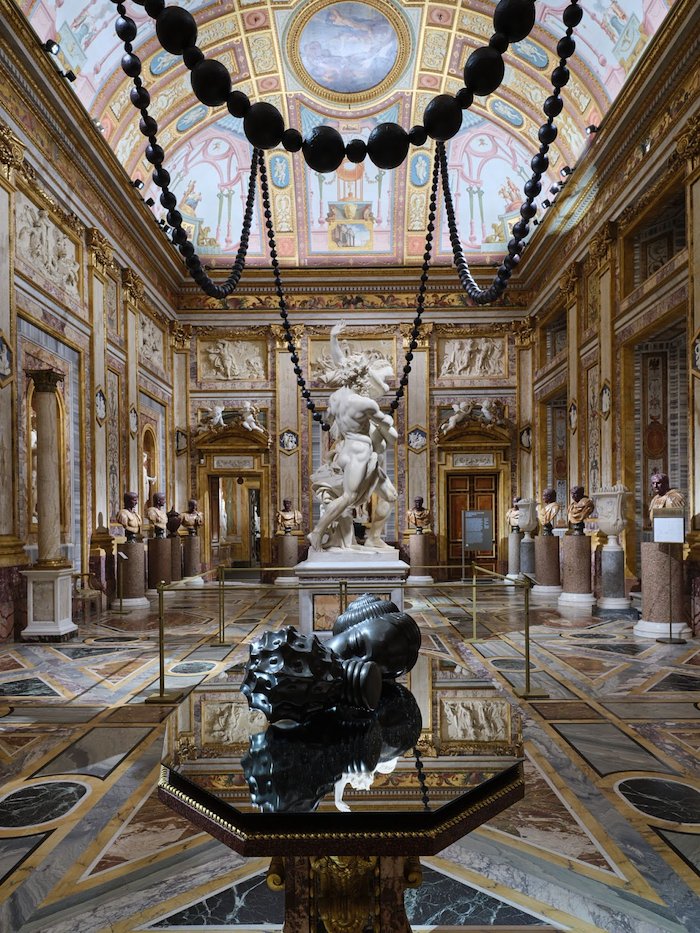
In recent years, the museum has staged temporary special exhibitions with big, overwhelmingly European names from modern and contemporary art, including Picasso, Lucio Fontana, Damien Hirst, and Louise Bourgeois. This summer, Kenyan artist Wangechi Mutu mounted an exhibition that was aptly billed as a site-specific intervention. Mutu’s work occupied the lavish galleries, staging imposing and generative juxtapositions with its surrounding Roman busts and trompe l’oeil frescos. Writer Eric Otieno Sumba reviews the exhibition here, revealing how Mutu worked with and against the institution to assert figures, culture, and histories otherwise absent from this place. https://www.thepublicreview.org/read/spiritus-sancti-eric-otieno-sumba-wangechi-mutu-galleria-borghese Wangechi Mutu: Black Soil Poems, installation view, Galleria Borghese, 2025

Berlin’s Haus der Kulturen der Welt revived a groundbreaking Uzbek film festival, Eric Otieno Sumba and Can Sungu reflect on how its Cold War–era screenings bridged global cinema and fostered south-south solidarities. Image: Hanna Wiedemann / HKW https://www.frieze.com/article/eric-otieno-sumba-can-sungu-253

Marie Nejar died last month at the age of 95. As far as the Initiative Schwarze Menschen in Deutschland (ISD) is aware, she was the last Black survivor of Nazi Germany. Obituary for the London Review of Books: https://www.lrb.co.uk/blog/2025/june/marie-nejar-1930-2025

O-Ton für Deutschlandfunk Kultur Radio am Rande einer Podiumsdiskussion der C/O Berlin und der Berliner Landeszentrale für Politische Bildung am 23. April 2024 https://www.deutschlandfunkkultur.de/post-kolonialer-diskurs-welche-rolle-spielt-selbstpraesentation-100.html
///
Soundbite for Deutschlandfunk Kultur Radio at the sidelines of a panel discussion hosted by c/o Berlin and the Berliner Landeszentrale für Politische Bildung on 23rd April 2024

Anlässlich der Ausstellungen A World in Common und Silvia Rosi . Protektorat veranstalten C/O Berlin und die Berliner Landeszentrale für politische Bildung eine gemeinsame Discussion. Es geht darum, sich bei der Auseinandersetzung mit Afrikas Geschichte(n) von westlich geprägten Darstellungen zu lösen und den Blick auf alternative Geschichtserzählungen, also Gegennarrative von Künstler:innen aus Afrika oder mit biographischen Bezug zu Afrika wahrzunehmen.

Konkret wollen wir uns mit der Darstellung Afrikas aus der Perspektive Schwarzer Berliner:innen sowie Akteur:innen mit afrikanischer Herkunft auseinandersetzen. Inwiefern kann auch Kunst als Mittel des Widerstands gegen (post)koloniale Narrative dienen? Wie können afrikanische Perspektiven sichtbarer gemacht und gestärkt werden? Welche Rolle spielen künstlerische Ausdrucksformen dabei, stereotype Bilder und rassistische Narrative zu hinterfragen und neu zu definieren? Mi, 23. Apr 2025, 18:30–20:00, mit Justice Mvemba (Mitte), Celia Parbey (rechts) und Eric Otieno Sumba (links), moderiert von Makda Isak

(Panel) 05 März 2025: 19:00 - 20:30 Uhr. Die Restitution hat begonnen: einige Benin-Bronzen und andere koloniale Raubgüter wurden bereits den Ursprungsländern übergeben. Die Kontroversen darum gehen aber weiter, seit Bronzen in Nigeria nach der Rückgabe in private Hand gelangten. Müssen die Zurückerstattenden das hinnehmen – oder gibt es auch eine Verantwortung der Ursprungsländer, global bedeutsames Kulturgut zugänglich zu halten? Das Podium fragt nach der Vision hinter der Restitution unter juristischen, politischen und kulturellen Perspektiven. Mit: Prof. Dr. Barbara Plankensteiner, Ethnologin und Leiterin des Museums am Rothenbaum – Kulturen und Künste der Welt (MARKK) in Hamburg, Eric Otieno Sumba, Politikwissenschaftler, Freier Autor und Redakteur im Haus der Kulturen der Welt, Berlin, Dr. Mathias Zintler, LL.M, KNPZ Rechtsanwälte https://www.law-school.de/termin/restitution-von-raubgut-alles-muss-raus

(Exhibition Tour) Feb 26, 2025, 18:00–19:00. In this dialogical format, sociologist, political scientist and writer Eric Otieno Sumba and guest curator Cale Garrido examine selected works from the group exhibition A World in Common and place them in a wider socio-political context. In doing so, they focus on the emancipative strategies of African and Afro-diasporic artists. What role does art play in social discourse and with regard to social justice? https://co-berlin.org/de/veranstaltungen/looking-world-common Image: Courtesy Dawit Petros

(Review) 'Stasis Quo: Eric Otieno Sumba on Helena Uambembe at MMK Zollamt', in Texte zur Kunst #133 (March 2024)

(Feature) 'Haunted Hydrology: Dominique White envisions the future from the bottom of the ocean', in Frieze #241 (March 2024)